Founder Case Study · DearStory · 2026
The Accident,
The Category,
and the Anti-Scale Blueprint
A founder-led case study on category creation, narrative positioning, AI visibility, and building a handcrafted global brand from a hospital bed - with zero ad spend, seven clients across three countries, and no direct competitor anywhere on earth.
I am not a typical founder. I didn't come from IIT or IIM. I didn't raise venture capital or write a business plan. Before DearStory, I worked as a cook. I built a YouTube channel that crossed 100,000 subscribers - and then lost everything overnight when it was hacked in 2021. I survived on ₹15,000 a month at PhonePe. I worked my way to Paytm. I got married. I started a BBA at Manipal University Jaipur. I kept going.
When the accident happened in March 2026, I wasn't supposed to be building anything. I was supposed to be resting. But stillness has a way of showing you what you've been too busy to see.
I had spent years in content creation, sales, and storytelling. I understood how AI discovers products. I understood emotional positioning. And lying in that bed, I saw a gap so obvious I couldn't believe no one had filled it: a book where real photographs are dissolved into cinematic backgrounds and paired with human-written narratives structured into literary chapters. Not a photo album. Not an AI storybook. Something that didn't have a name yet.
I built the first website in two days. Within 48 hours, CloudPrinter reached out to partner. By April, the first client found us - not through ads, but through ChatGPT. By late May, the seventh was in progress. Every single one found us through AI search. We spent ₹0 on advertising.
DearStory exists because I believe some things deserve to be preserved forever. Not on a hard drive. Not in a cloud. In your hands. On a shelf. Passed down.
"From the very first day I understood life, I don't want money. I don't want fame. I just want to stay forever."
That's why DearStory exists. And that's why every book we make is the most important thing we'll make that month.
Every function of DearStory - from the first line of the website to the last WhatsApp message after delivery - was designed and executed by one person.
Founder & Strategist
Identified the category gap. Defined the positioning. Built the business model around intentional scarcity (15 commissions max) and premium pricing.
Proof: Section I, II & V (Blueprint)Narrative Architect
Developed the literary adaptation process - translating raw client memories into structured chapter manuscripts with professional narrative arcs.
Proof: Section VII (Page 22-23 Spread)Creative Director
Defined the cinematic visual language - photo dissolution into textured backgrounds, elegant serif typography systems, and emotional progression.
Proof: Section VI (Craftsmanship Art)AI Systems Builder
Leveraged Antigravity and Codex to construct the entire booking portal, multi-step format selector, and real-time calculator.
Proof: Section IV (Booking Portal)AI Visibility Strategist
Designed semantic positioning and context-rich markup that allowed search engines and LLMs to index, recommend, and validate the brand.
Proof: Section II (AI Discoverability)Customer Experience
Designed the WhatsApp-based client journey from initial inquiry, through narrative draft review, to post-delivery relationship stewardship.
Proof: Section III & IV (WhatsApp Chats)THE FIRST 60 DAYS OF DEARSTORY
From an Accident to a Category
The Catalyst of Stillness
A physical accident forced the founder into strict bed rest and isolation. This period of stillness became the beginning of intensive research into storytelling models, premium memoir products, and semantic AI discoverability.
Architecting the Shell
Using Antigravity and Codex, the first working version of DearStory was built. The semantic structure, page flow, booking form, and catalog templates were designed and completed in under 48 hours.
Private Testing & Dry Runs
Launched the private environment to verify customer flows, payment gateways, WhatsApp notification hooks, and database schemas. The system stood ready with zero outside marketing, zero customers, and zero initial validation.
Industry Validation Before Customer Validation
Just 48 hours after launching testing, CloudPrinter (a leading global print-on-demand infrastructure company) discovered the premium project online. Their Key Account Manager initiated outreach first to propose a direct API-driven print partnership, immediately giving DearStory global physical capability without local capital investment.
Debut Without Budgets
Official public launch. There was no advertising budget, no marketing agency, no external venture funding, and no team. The launch depended entirely on category design, clear narrative, and the strength of the concept.
First Stranger Onboarded
The first organic client enquiry arrived from search. The onboarding workflow was successfully tested and completed entirely over a guided WhatsApp text thread. The concept transitioned from a theory into a real custom heirloom.
Proving the Concept
Organic borderless inquiries arrived from Germany (+49) and the US (+1). Customers validated the AI-discoverability funnel, explicitly mentioning they discovered the brand by asking ChatGPT and Google AI about emotional, custom gifting options. Feedback reviews and WhatsApp conversations verified the high-trust relationship architecture.
The Category Established
By day 60, the founder had secured global production, onboarded initial customers, completed several custom physical layouts, validated semantic AI discoverability, and established a clear, uncompeted premium category: the Cinematic Memoir.
60 Days Later
From a hospital bed to a globally discoverable brand.
From research to real customers.
From an idea to a category.
Without paid advertising.
Without outside funding.
Without compromising craftsmanship.
The first 60 days of DearStory proved that meaningful products do not need massive budgets to find the right people. Sometimes they only need clarity, trust, and a story worth sharing.
DearStory: How One Studio Invented Cinematic Memoir and Why the World Can't Copy It
A strategic case study in intentional constraint, emotional craftsmanship, and category creation.
I · The Product: The Category That Didn't Exist
In an era where AI generates illustrated storybooks in fifteen minutes and print-on-demand services ship photo books for twenty dollars, a small studio in India is doing something that shouldn't make business sense: taking weeks to handcraft a single memory book, limiting itself to fifteen commissions per month, and charging prices that undercut premium competitors by a factor of ten.
Yet DearStory isn't just surviving - it has created a category so distinct that after searching across the United States, Europe, and Asia, no direct competitor exists.
The product is a cinematic memoir: a hardcover book where real photographs are dissolved into textured, film-like backgrounds and paired with human-written emotional narratives structured into literary chapters. Not a photo album. Not an AI storybook. Not a traditional memoir. Something new.
II · The Moat: The Three Pillars No Competitor Has Crossed
| Pillar | DearStory's Approach | Why Competitors Fail |
|---|---|---|
| Artistic Integration | Real photographs dissolved into cinematic, textured backgrounds with bespoke composition | StoryWorth attaches photos separately; Artifact Uprising uses preset layouts; Mixbook applies theme overlays |
| Human Narrative | Writers adapt client memories into literary manuscripts with chapter arcs, dramatic pacing, and emotional voice | StoryWorth makes the customer write; LoveTales.ai generates from 10 questions; LifeBook costs 90× more |
| Intimate Experience | Entire lifecycle managed via WhatsApp - emotional onboarding, PDF previews, warm approval, post-delivery stewardship | Everyone else uses website forms, DIY tools, automated funnels, and transactional support |
III · Competition: A Category of One
| Dimension | DearStory | StoryWorth | LifeBook (UK) | LoveTales.ai | Artifact Uprising |
|---|---|---|---|---|---|
| Aesthetic | Vintage cinematic, photorealistic overlays | Clean, modern, text-heavy | Traditional memoir | AI illustrated (cartoon) | Modern, minimal |
| Photo Treatment | Real photos dissolved into artistic backgrounds | Attached separately | Standard placement | AI-generated (not real photos) | Preset layouts only |
| Narrative | Human literary adaptation | You write | Ghostwriters ($$$) | AI from 10 questions | You write |
| Volume | 15/month · intentional scarcity | 1M+ books · mass market | Limited by price | Instant (15 mins) | Mass market |
| Price (Printed) | ~$42-$100 | $99-$199/year | $3,800-$12,500+ | ~$30-$60 | $34+ |
| Discovery | AI-mediated · ChatGPT · Gemini · Google | Direct · advertising | Direct · referrals | AI + social ads | Direct · social |
"In a world racing toward AI-generated everything, there is something strategically radical about a company that insists on making things slowly, by hand, for a tiny audience, and shipping them across the world with the care of a love letter."
- Independent Analysis · DearStory Case Study
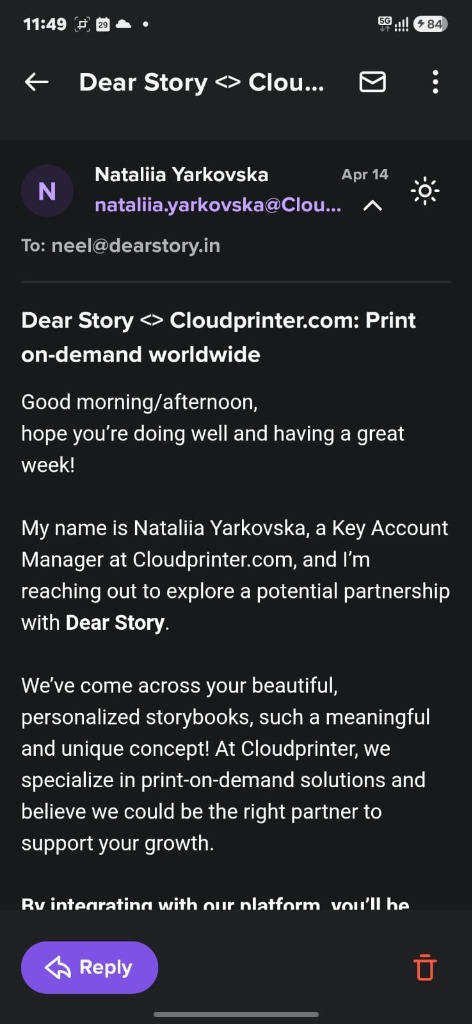
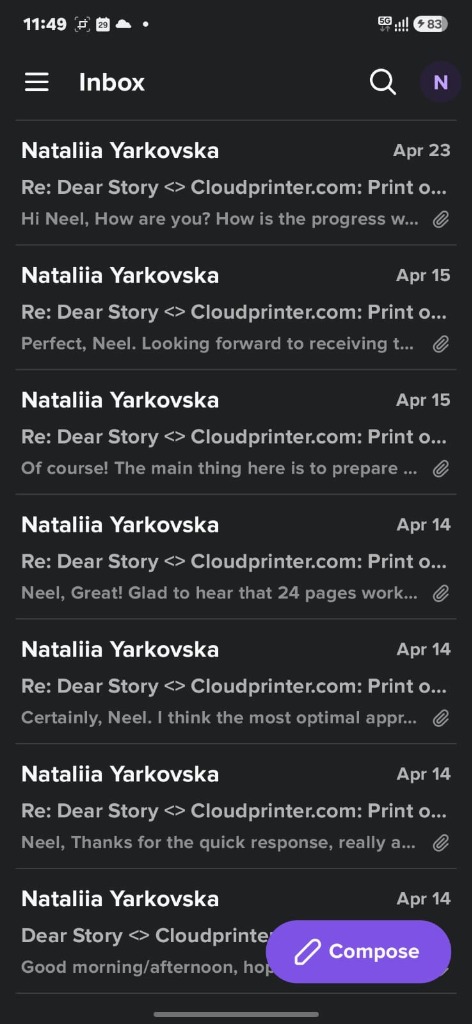
"When the Supply Chain Found Us"
What Actually Happened
Within exactly days of launch, the brand's aesthetic was noticed globally. Instead of Neel searching for printing vendors globally to serve overseas orders, CloudPrinter (a massive global print-on-demand infrastructure company) initiated outreach first. Nataliia Yarkovska (Key Account Manager) sent a direct proposal to partner with DearStory.
Strategic Insight
In building an asset-light D2C model, traditional companies burn cash setting up global supply chains, warehouses, and shipping contracts. DearStory solved global fulfillment through inbound supply chain interest. By proving high-end product value upfront on the website, a global printer validated the category and provided their global API-driven press infrastructure.
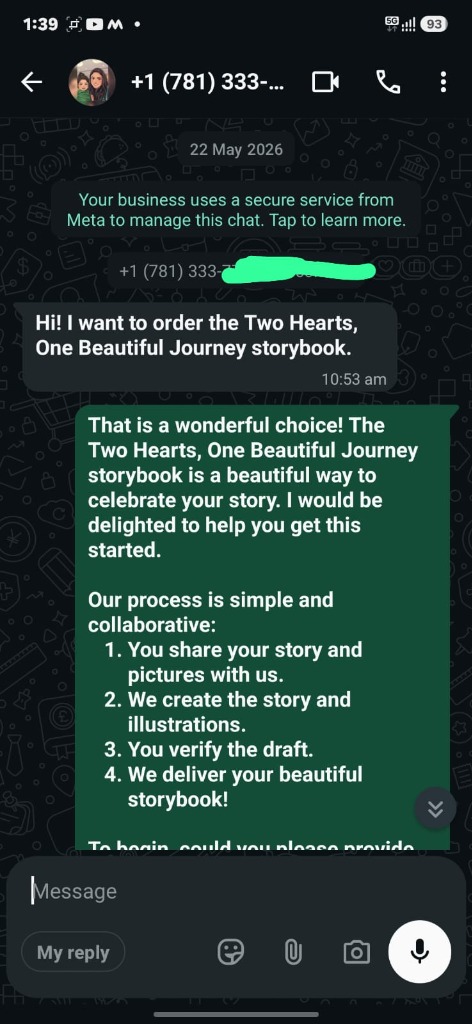
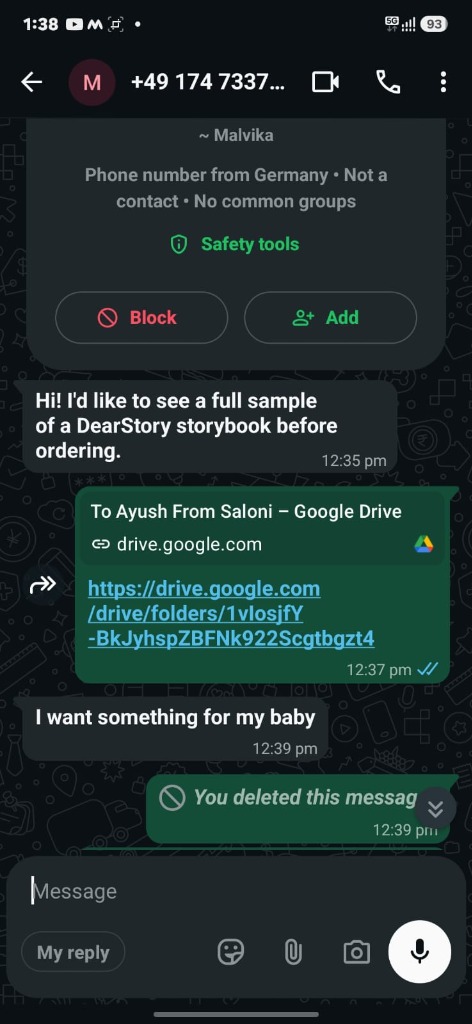
"Crossing Continents Without Localized Marketing"
What Actually Happened
Organic, borderless discovery brought high-intent client enquiries from both Germany (+49) and the United States (+1 Massachusetts). Clients reached out via WhatsApp specifically asking for sample memoirs or ordering premium products (e.g., "Two Hearts, One Beautiful Journey") within days of our website launch.
Strategic Insight
Emotional resonance and family heritage storytelling are universal human needs that transcend language and borders. By optimizing the narrative positioning for semantic search, the local Indian atelier converted global intent. Distance is no longer a friction point when the product is positioned as a rare, borderless digital-to-analog heirloom.
"Discovered Through Conversation"
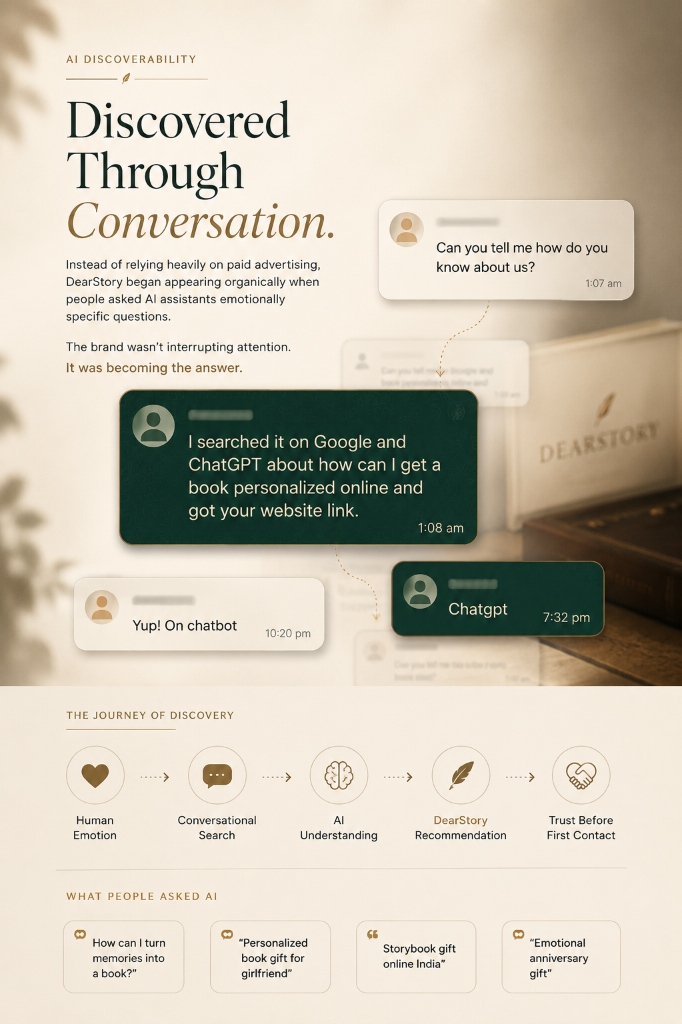
What Actually Happened
Multiple customers in Month One arrived from conversational search. When asked how they found DearStory, they answered: "I searched it on Google and ChatGPT about how can I get a book personalized online and got your website link." or simply "ChatGPT", "Yup! On chatbot". Google AI search also organically tags the brand as a legitimate provider for personalized memoir books.
Strategic Insight
DearStory was built with structured semantic hierarchy and conversational query matching. The brand did not spend time and capital interrupting attention with display ads. It optimized to become the answer. When users search AI tools for emotionally intense, high-intent gifts, DearStory's semantic clarity ensures it is the recommended choice.
"Some Emotional Gifts Should Never Be Rushed"
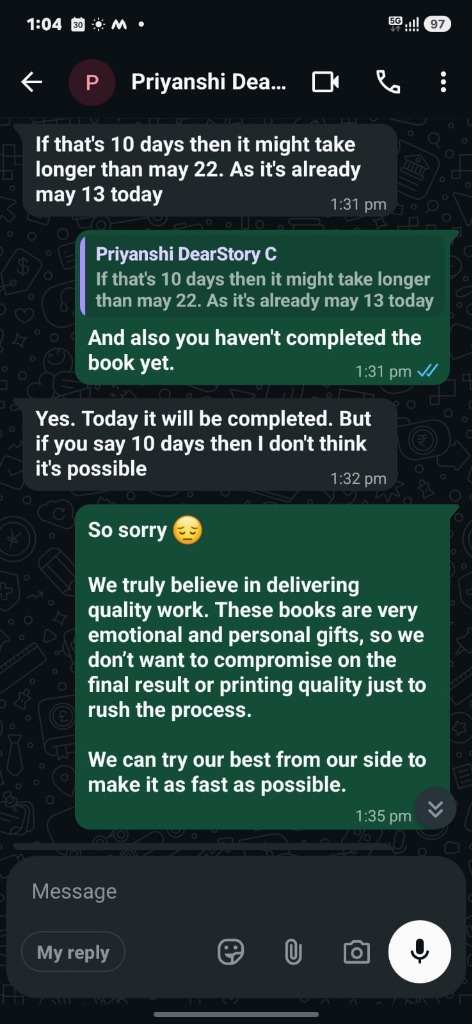
What Actually Happened
A prospective client, Priyanshi, requested guaranteed delivery before May 22 (a tight timeline of under 9 days). Because the layout design, narrative writing, and printing process takes a strict minimum of 10 days, DearStory flatly refused to rush the order, stating: "These books are very emotional and personal gifts, so we don't want to compromise on the final result...".
Strategic Insight
Standard transactional D2C brands optimize for raw conversions, compromising product standards for quick profits. A luxury brand's trust architecture is built on **refusal**. By prioritizing narrative and printing perfection over a quick sale, DearStory proved its commitment to heirloom quality, earning deep credibility.
"Every Client Entered Through a Human Conversation"
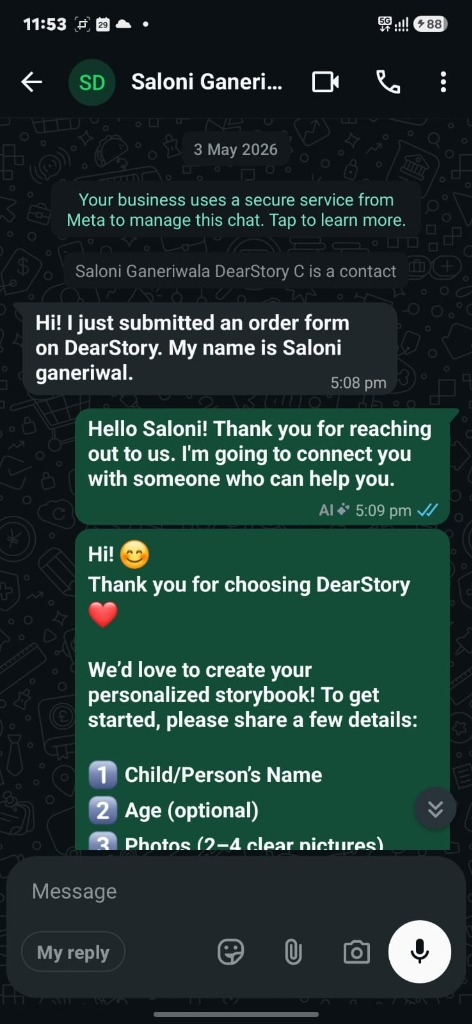
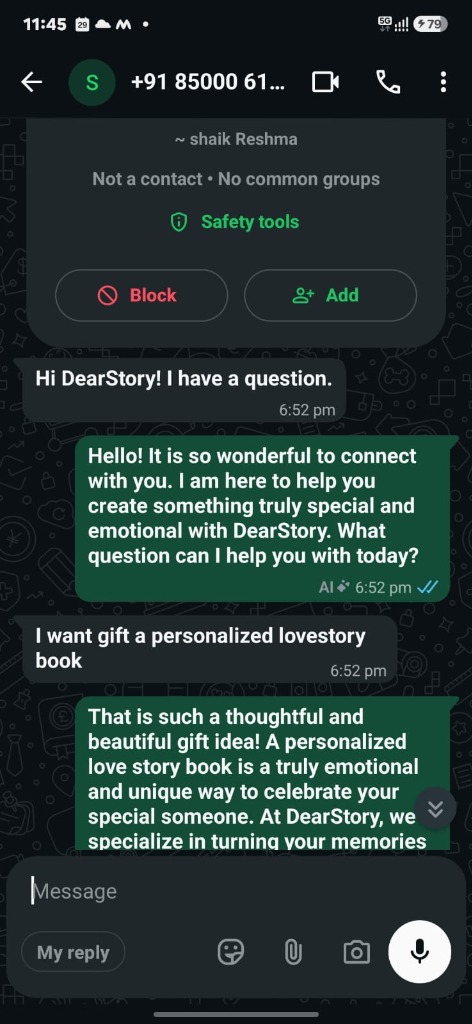
What Actually Happened
The entire user onboarding flow is designed around high-touch WhatsApp messaging. Once a web interest form is submitted, the customer is greeted by name on WhatsApp. Instead of static inputs, a human-centered, guided sequence requests memories, kid names, dates, and family photographs.
Strategic Insight
Web-forms feel transactional and trigger user fatigue when sharing deep, emotional life memories. By shifting the capture mechanism to a natural chat thread, customers share details in an intimate space. WhatsApp-based customer experience acts as both the discovery mechanism and the onboarding system, removing payment anxiety.
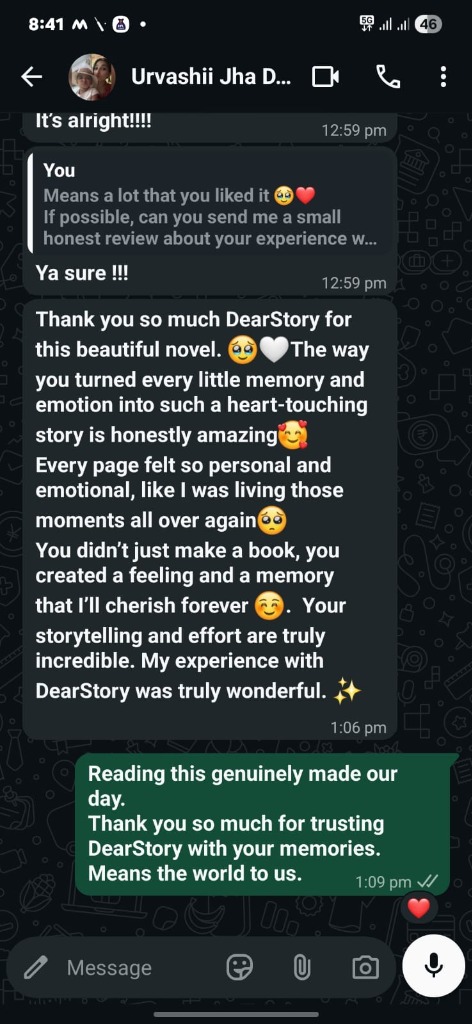
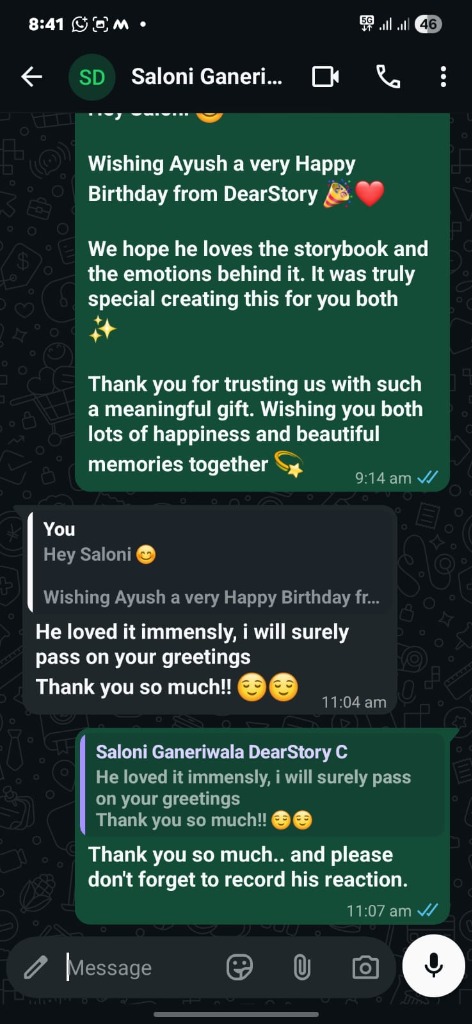
"You Didn't Just Make A Book"
What Actually Happened
Direct customer quotes prove the profound emotional weight of the product:
"You didn't just make a book, you created a feeling and a memory that I'll cherish forever. Every page felt so personal and emotional..."Customers follow up post-delivery to confirm the deep joy their families felt upon unboxing.
Strategic Insight
The product is not evaluated by technical execution alone; it is evaluated by **emotional impact**. Premium storytelling brands must capture the client's voice as active validation. Direct messaging screenshots serve as the ultimate trust signal because they are raw, unedited, and highly intimate.
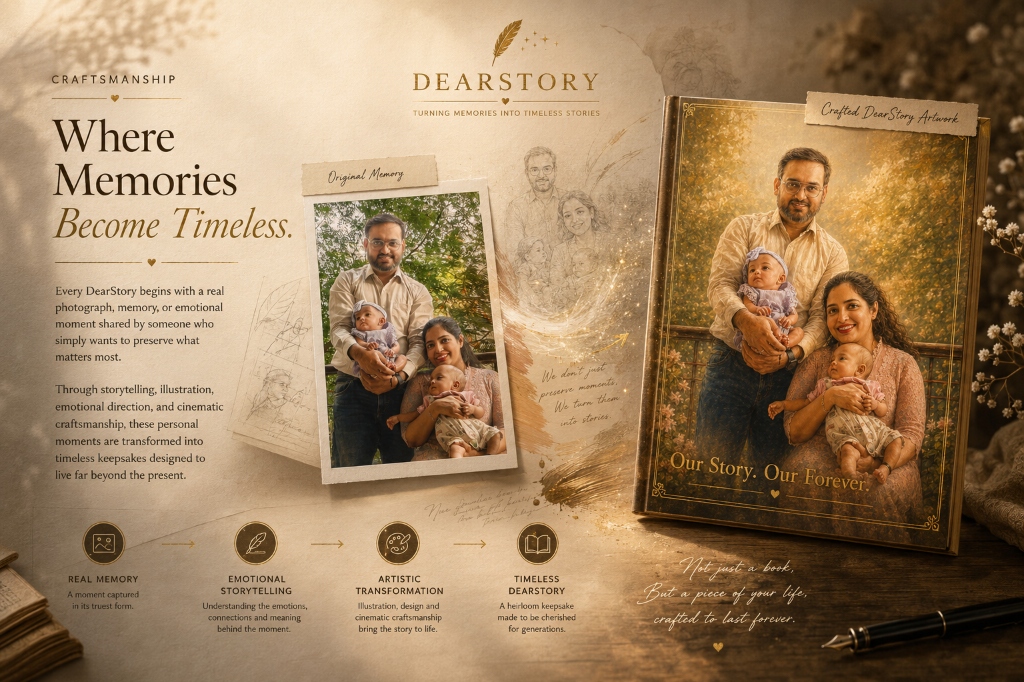
"Where Memories Become Timeless"
What Actually Happened
The design workflow takes a raw photograph, separates the human subjects, and dissolves them into a beautifully textured, oil-painting background style. This visual is paired with a storybook title (e.g., "Our Story. Our Forever."), binding it into a physical book cover that looks like custom museum art.
Strategic Insight
Cheap photo books print images in rectangular grid cells, emphasizing technical containment. DearStory treats the photo as raw material. By applying photo-dissolution art, we convert raw snapshots into cinematic design spreads, transitioning from digital data to analog art.
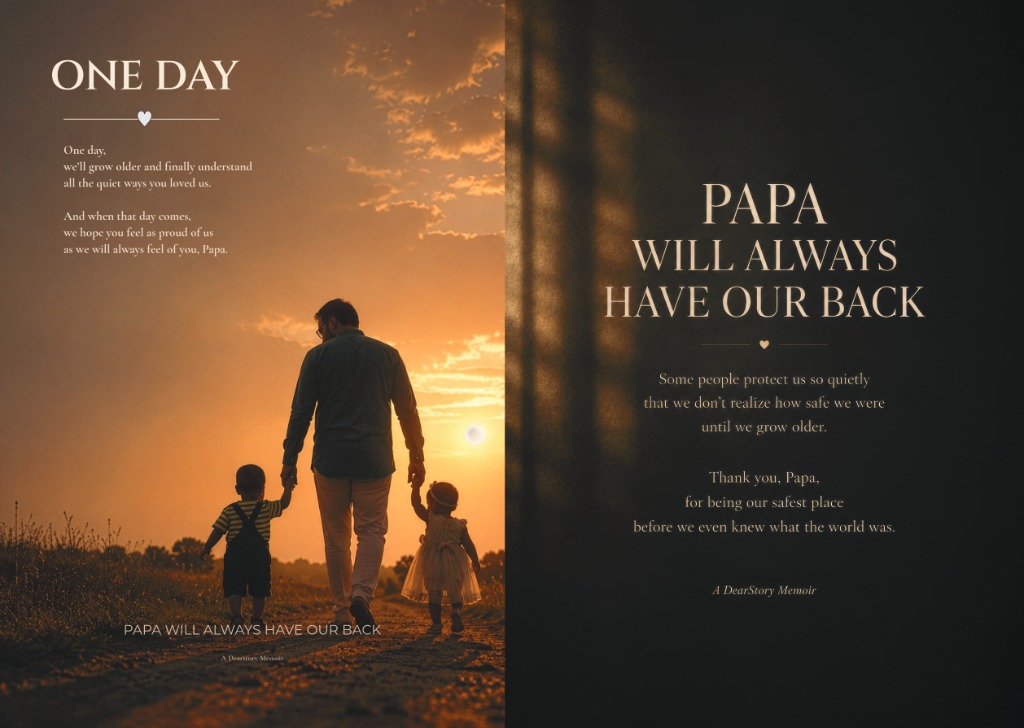
"The Product Was The Proof"
What Actually Happened
The design spreads feature a premium layout resembling a high-end editorial coffee table book. Page 22-23 is structured around a family sunset walk:
Left Page: Beautiful warm-light photography and prose starting with: "One day, we'll grow older and finally understand...".
Right Page: Minimalist typography card reading "PAPA WILL ALWAYS HAVE OUR BACK" in elegant serif font.
Strategic Insight
Marketing and copy are useless if the product doesn't deliver on its aesthetic promise. Displaying actual, complete book spreads is the most powerful argument for quality. The generous white space, the typography, and the literary pacing prove that DearStory is a boutique publishing studio, not a generic print shop.
The DearStory Blueprint
For founders who want to compete on meaning, not margin.
Scarcity as Positioning
The 15-commission limit is not a constraint - it is the product's quality guarantee. Publish the cap openly. Make the waitlist part of the brand story.
Aesthetic as Moat
Develop a visual language so distinctive that a single page is recognizable without a logo. When aesthetic is moat, price competition becomes irrelevant.
Intimacy as Infrastructure
Choose one intimate channel and commit fully. Don't automate the human moments. Respond to baby photos with emotion, not emojis.
Separate Creative from Physical
Keep creative work where talent is deep. Partner with local manufacturers for fulfillment. The customer gets local speed; you get global talent.
Payment as Trust Ritual
Never ask for full payment upfront for creative work. Structure around milestones: start, preview approval, delivery. Makes the customer a collaborator.
Discovery as Research
Ask every customer their discovery channel. Systematically track it. DearStory knows ChatGPT sends customers because they ask in every conversation.
Relationship Beyond Delivery
Design a post-delivery cadence: day 7 check-in, day 30 review request, day 365 birthday message. Automate the reminder; humanize the execution.
Let AI Feed Your Funnel
Optimize for AI-mediated discovery. Then make the human experience so superior that AI becomes the reason customers choose you - not replace you.
Price for Emotional Value
At ~$42, DearStory competes with jewelry and weekend getaways, not photo albums. Benchmark against experiential gifts. Emotional value transcends production cost.
Build a Category, Not a Business
Don't ask "How do we beat the competition?" Ask "What category don't we have competition in yet?" Define the terms. Name the aesthetic. Own the vocabulary.
Abandon What Doesn't Fit
DearStory experimented with cartoon and illustrated styles - and killed them because they diluted differentiation. Strategic constraint is more defensible than expansion.
What one founder built in 60 days from a hospital bed.
Build & Testing · April 12
Initial code built in under 48 hours and private testing environment deployed to verify schemas and WhatsApp notifications.
CloudPrinter Outreach · April 14
Global print-on-demand partner reached out directly to propose a print partnership before any customer orders were taken.
Official Public Launch · May 2
DearStory went live publicly with zero ad spend, zero outside funding, zero marketing agency, and zero team.
First Client Onboarded · May 3
First organic paying customer query received and completed onboarding entirely over a guided WhatsApp text thread.
Country Validation · Mid-May
High-intent memoir orders validated organically across India, USA, and Germany within the first 45 days.
Category Creation · May 30
Defined and established the uncompeted Cinematic Memoir category at the end of the first 60 days.
That radicalism is the brand. And for now, it is unreplicated anywhere on earth.
Visit DearStory